
Office mould removal in Singapore. Condensation and water ingress assessment, source identification and planned remediation for office environments, with documentation for building management.
Mould may appear on ceiling tiles, near air conditioning, on walls or stored materials where unwanted moisture persists. Condensation and water ingress are different possible causes, and more than one cause can be present. Record observations and assess the moisture pathway before selecting remediation.
Where office mould comes from
Condensation can form when air conditioning cools a surface below the dew point. Ceiling tiles near fan coil units, ducting and external walls are locations where this can occur. Sealed floors with limited fresh air may trap the moisture. Water ingress from pipes, the roof or the floor above can produce localised staining. Both causes can be present at the same time. The assessment investigates which source or sources are active before treatment is recommended.
Why office mould is worth treating properly
- Air quality: if mould is present near air conditioning, it can contribute to a musty smell and staff complaints. Whether spores circulate through ducting depends on the system and the extent of growth.
- Record the observations, notify building management where appropriate, and check the lease and maintenance arrangements before agreeing who handles repairs and remediation.
- Cost: untreated mould can damage ceiling tiles, walls and finishes, raising reinstatement costs at the end of a lease.
- Reputation: visible mould in a client facing area can be a credibility concern.
How we assess office mould
Four Solutions uses several assessment methods to investigate the moisture source and visible mould extent before recommending a scope.
- Humidity and material moisture checks. Relative humidity and material moisture readings identify which surfaces are damp and whether conditions are drying or getting worse. These readings inform the treatment scope but do not identify mould species.
- Thermal imaging. An infrared camera shows surface temperature patterns that can indicate condensation, cold bridging or areas of interest for further investigation. It does not see through walls or confirm mould on its own.
- UV inspection. Ultraviolet light can highlight certain surface contamination that may not be visible under normal lighting. It is a supplementary inspection method and does not prove the extent of hidden growth.
The US EPA commercial building mould remediation guide is a useful educational reference for the general approach to assessment and containment in occupied buildings.
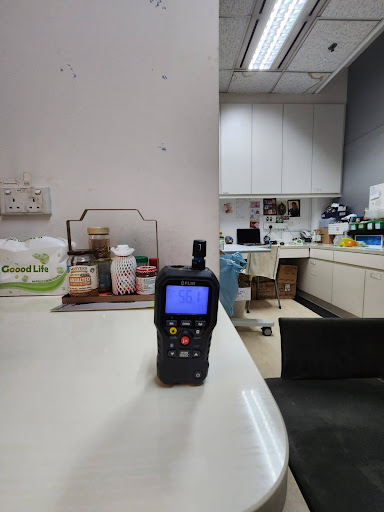
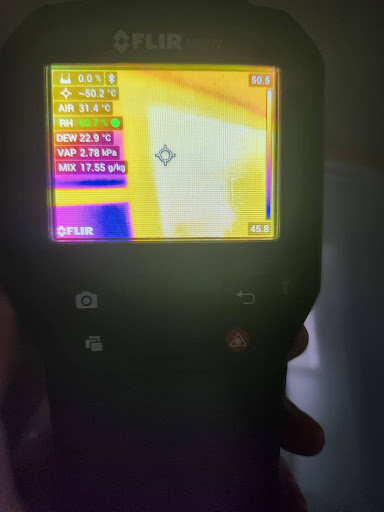
Condensation or water ingress?
The pattern of growth and moisture readings can provide clues, but conditions may overlap and photos alone may be insufficient to determine the cause. Four Solutions does not repair plumbing, waterproofing or aircon faults; where these are the source, a separate contractor handles the building repair before or alongside mould remediation.
- Condensation clues. Moisture on cold surfaces near aircon or external walls, sometimes following a seasonal or usage pattern.
- Water ingress clues. Localised staining or water trails from above, patches that worsen after rain, or damp spots that do not correspond to any cooling equipment.
How we treat office mould
We contain the affected area to protect staff and workstations, remove mould at the source rather than painting over it, treat and protect the surface, and address the moisture cause to reduce the risk of regrowth. Ongoing moisture control remains important. Occupancy, scheduling, isolation, ventilation and return to use are agreed with you before work begins.
Preparing for a site visit
Before a site visit, the facilities manager or tenant can help the assessment by preparing the following.
- Photos from safely accessible areas. Photographs of visible affected areas. Do not open ceiling voids, contaminated panels or electrical enclosures; leave concealed areas for the assessment team.
- Access arrangements. Confirm which areas need access: ceiling voids, aircon fan coil units, risers, wet areas and any locked service rooms. Arrange building management approval if needed.
- Operation constraints. Note working hours, floors that must stay occupied, and any sensitive equipment that needs protection.
- Related repairs. If there is a known leak, roof defect, aircon drainage issue or plumbing problem, note whether a separate contractor is already handling that repair or whether it needs investigation.
Get an office mould assessment
Four Solutions carries out commercial and office mould remediation across Singapore. Send photos from safely accessible areas, note the affected locations and your access constraints, and we will advise on the assessment scope.
See commercial mould removal for the full service, residential mould removal for homes, and the mould inspection guide for what an assessment covers. Message us on WhatsApp to arrange a site assessment.
Office mould FAQs
How can an inspection investigate suspected hidden mould?
Visual inspection and humidity or material moisture checks can guide where further investigation is needed. Thermal imaging shows surface temperature patterns; it does not see through walls or confirm mould on its own. Concealed areas may need authorised access or further specialist investigation.
Is condensation or water ingress causing the mould?
The assessment investigates which source is active. Moisture on cold surfaces near cooling equipment can suggest condensation; localised staining from a specific point can suggest water ingress. Conditions may overlap, and investigation may be needed to confirm.
What documentation should a facilities manager request?
Request documented findings with photos and readings, the agreed scope of works, which repairs are separate (plumbing, waterproofing, aircon servicing), and any aftercare or follow up recommendations. These support facility records and lease documentation.
What should we prepare before a site visit?
Photographs of visible affected areas from safely accessible locations, confirmation of ceiling and riser access, your operating hours and any known plumbing or aircon issues. The preparation section above has the full list.
Can the office stay occupied during treatment?
Occupancy, scheduling, isolation, ventilation and return to use are agreed with you before work begins. The scope and site conditions determine the arrangement.