
A visual and moisture assessment looks at the affected surfaces and the conditions that may be letting mould grow. Laboratory sampling answers a different question, about collected material or air samples. Before paying for either, decide what you need to learn: where the dampness comes from, what work is needed, or whether someone has asked for a particular test report.
Mould testing and mould inspection are often mentioned as if they were the same thing. They answer different questions, so decide which one you need before you pay for it.
Start with the decision, not the equipment list
Tell the assessor where the problem appears, how long it has been there, whether it returns after cleaning and whether there has been a leak. Send one wider photo and one closer photo without disturbing the material. A list of instruments does not tell you the scope, the access limits or what happens after the assessment.
Ask for the proposed checks, any areas that cannot be reached, the written findings you will receive and the next step if the cause stays uncertain. If a landlord, insurer or building manager needs a particular report, ask them to state that requirement before you book. Do not assume that a routine treatment quote satisfies it.
Two different questions
- Looks at visible growth and accessible surfaces.
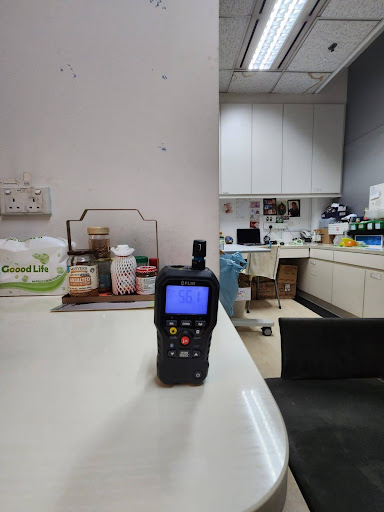
- Considers moisture and humidity readings, ventilation and possible leaks or condensation.
- Gives observations and photos that guide treatment and repair decisions.
- Does not identify a mould species or show everything behind a wall.
- Answers a question about collected surface, bulk or air samples.
- Needs a stated purpose and someone qualified to plan the sampling and interpret the report.
- Is separate from finding the moisture source or agreeing treatment work.
- Is not a service this guide offers or prices.
What a visual and moisture assessment can explain
Four Solutions' published mould inspection and moisture assessment considers visible growth, accessible surfaces, moisture and humidity readings, and relevant inspection images. These observations help you discuss treatment and possible moisture pathways. They are not a laboratory identification of mould species, and a photograph or thermal image is not a complete view inside a wall. For a first check of your own, the room-by-room mould guide shows what to look for.
When does a test add something useful?
The US Environmental Protection Agency says that in most cases, if visible mould growth is present, sampling is unnecessary, and that no EPA or other federal limits have been set for mould or mould spores. It says surface sampling can help check that an area has been adequately cleaned or remediated, and that sampling needs an experienced specialist who can choose an appropriate sampling plan and explain what the findings mean. For suspected hidden mould it advises caution, because disturbing a growth site can release large numbers of spores, and suggests considering professional help.
This is general US technical guidance, not a Singapore standard and not a promise that every property needs the same approach. Before commissioning a test, ask what question it will answer and how the answer would change the proposed work. Ask who collects and analyses the sample, what the report contains and who explains its limits. A test result and fixing a dampness problem are separate pieces of work.
Five questions for any quotation
- What does the assessment include, and what is excluded?
- Is any sampling proposed? What decision would the result support?
- Who performs the sampling and who interprets the report?
- Does the quote cover treatment, moisture-source work, finishing, or only the assessment?
- What happens if concealed areas need a further visit or another specialist?
Do not compare two prices until the scope matches. Four Solutions' assessment and treatment route is described on its mould removal service page, with the factors behind a quote in the mould removal cost guide. Whether laboratory sampling or a separate report is available has to be confirmed with the provider who would carry it out. This guide does not introduce a testing package or a new inspection charge.
Arrange the right assessment
Send the property type, affected rooms, visible growth or smell, how often it returns and any known leaks. Say whether you want advice on treatment or whether a third party has asked for a particular report. Concealed areas may need an onsite visit, and the written quote should confirm the agreed scope before work starts. Four Solutions' NEA Vector Control Operator registration relates to pest control, not to certification of a mould inspection or test.
Message Four Solutions on WhatsApp with your photos and the questions above.
Sources: US EPA, Is sampling or testing for mold necessary? and US EPA, Mold testing or sampling. Guidance checked 8 October 2026.
Mould testing and inspection FAQs
Is a moisture reading a laboratory mould test?
No. A moisture reading is an observation about a material or its conditions. It does not identify a mould species and it is not a laboratory result.
Do I always need sampling before treating visible mould?
Not necessarily. The US EPA says sampling is unnecessary in most cases where visible mould growth is present. Ask what decision the sampling would support and how its result would change the proposed work.
Who should interpret a mould sampling report?
The EPA recommends a specialist with relevant sampling expertise. Before you book, check who will select the sampling method and explain the report's meaning and limitations.
Does this guide mean Four Solutions provides laboratory testing?
No. This guide explains what to ask. Confirm any sampling or report scope separately with the provider. Four Solutions' published assessment considers surfaces, moisture conditions and relevant images.