
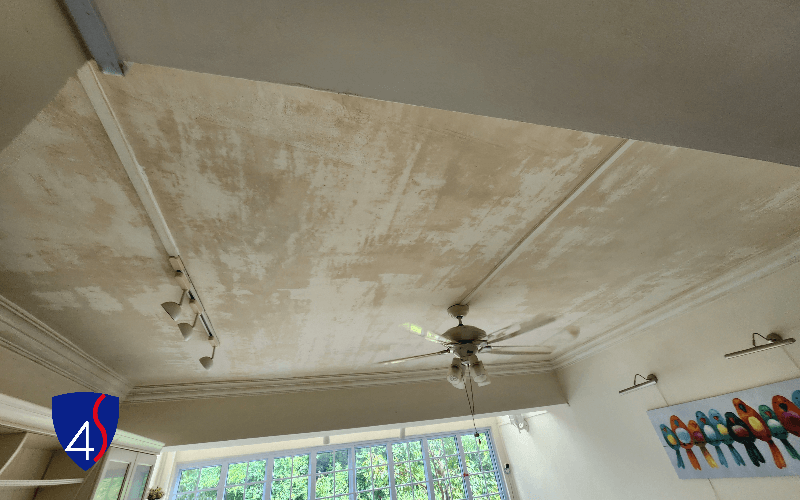
Check each room for four signs you can see or notice without touching anything: a dark or speckled patch, a musty smell, bubbling paint or visible moisture, and growth that returns after cleaning. The US EPA says an area under about 10 square feet, roughly one square metre, can in most cases be cleaned yourself with gloves, goggles and an N95, with exceptions such as contaminated water or health concerns. Larger, recurring or hidden cases need the moisture source found. Four Solutions quotes most cases from two or three photos on WhatsApp and arranges a site assessment for hidden cases.
You can check most rooms yourself without equipment. This checklist covers what to look for and notice in each room, what you cannot tell from the surface, and when a patch is worth cleaning yourself versus sending us photos. If growth is confirmed, Four Solutions provides mould removal in Singapore that treats the moisture behind it as well as the surface.
Four signs you can observe without equipment
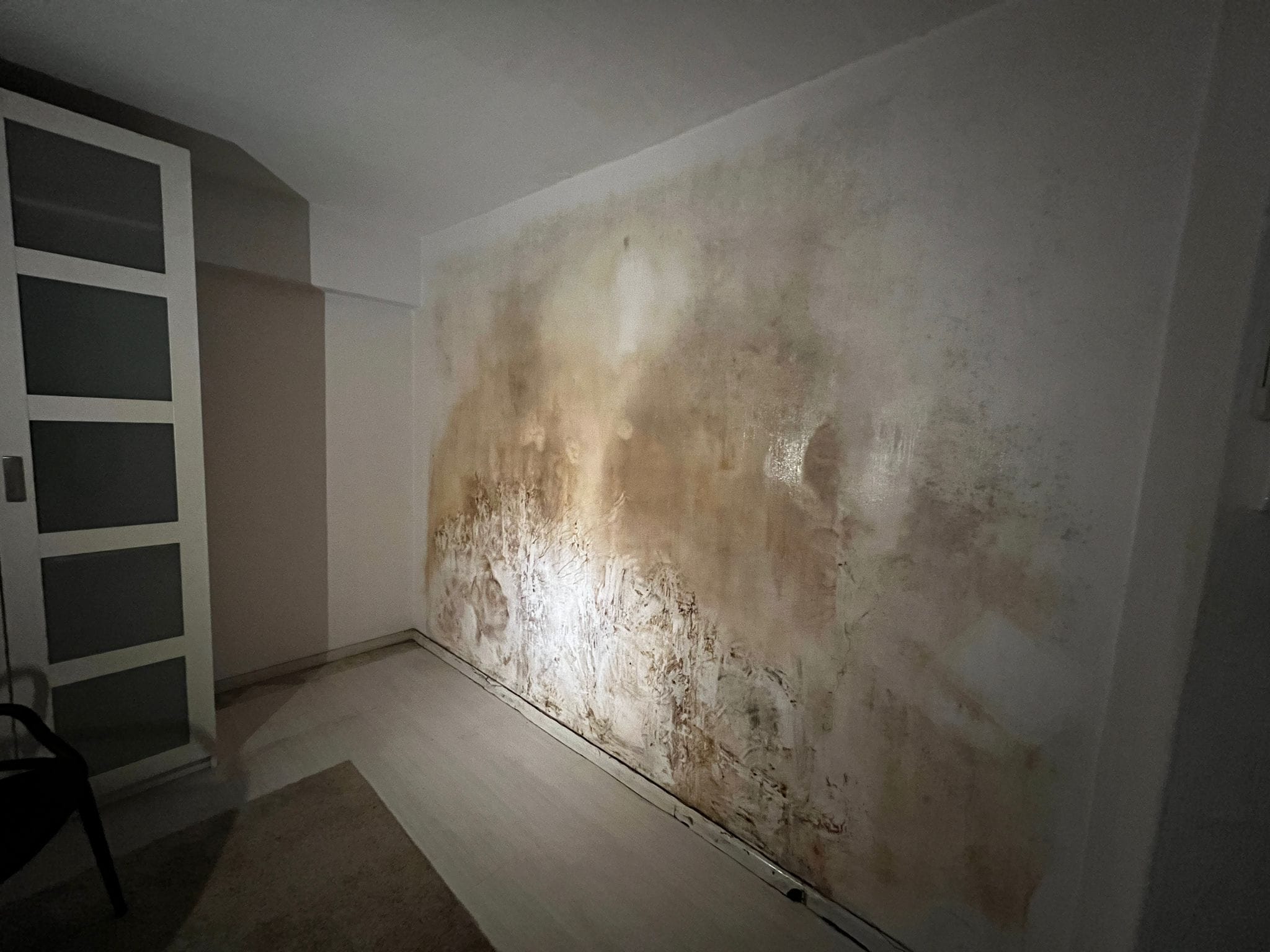
- Sight. Black, dark green, brown or grey patches, fine speckles like pepper, or a fuzzy or powdery film. On painted walls it often starts as a shadow in a corner or along the ceiling line.
- Smell. A musty, earthy smell you notice when you walk into a room that has been closed up, open a wardrobe, or switch the aircon on. There is no need to put your face close to a patch.
- Paint damage and visible moisture. Paint that bubbles, flakes or peels, a tide mark that shows where water has sat, staining that spreads, or water droplets on a wall or ceiling. Look rather than touch; the EPA advises against touching mould with bare hands.
- Recurrence. A patch you cleaned that comes back. That is a reason to look for the moisture source; it does not tell you what kind of mould it is.
One of these on its own is a reason to look more closely. Two or more in the same place, or a patch that returns, is a reason to find the moisture source rather than clean again.
Room by room: where to look and what to check
Bathroom and toilet
Look at the ceiling above the shower, the corners where the ceiling meets the wall, the grout lines, the silicone around the basin and bath, and the underside of the shower screen. Run the exhaust fan and check that it actually pulls air; a fan that spins but moves little air can leave moisture in the room. See the bathroom mould guide and the ceiling mould page.
Bedroom walls, especially an external wall
Pull the bed and wardrobe a hand width away from any wall that faces outside and look behind them with a torch. Walls behind furniture get little air movement, and an outside wall can collect condensation in some conditions. Look low along the skirting and high along the ceiling line for staining, bubbling paint or moisture.
Wardrobes, shoes and leather
Open the wardrobe and note any musty smell. Then check the back panel, the corners of the floor, the inside of the door and anything leather or canvas. White or grey bloom on a bag or belt can be mould rather than dust. See the wardrobe and leather guide.
Aircon unit, ledge and the wall below it
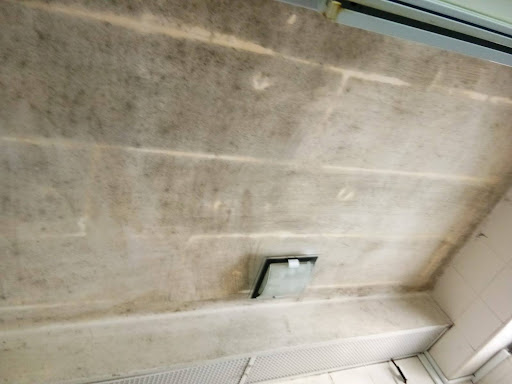
Look at the louvres and the drip tray edge, the ledge the unit sits on, and the wall and ceiling directly around it. Black speckling along the louvres, a musty blast when it starts, or a damp patch below the unit points to condensation or a blocked drain line. See the aircon mould guide and the aircon mould removal page.
Kitchen
Open the cabinet under the sink and check the back and base around the pipe entry, the wall behind the fridge, the underside of the cabinets above the hob and sink, and the silicone along the worktop. A slow drip under a sink can go unnoticed until the cabinet base is stained or swollen.
Windows, curtains and blinds
Check the window frame and the sill, the wall below the sill, and the hem of the curtains or the bottom slats of blinds. Condensation on cold glass drips and collects at the bottom; fabric that touches it stays damp.
Store rooms, bomb shelters and cardboard
Low airflow rooms packed with boxes, paper and fabric hold humidity. Lift the bottom boxes and check the back wall, the corners and the cardboard itself for staining or a musty smell; damp cardboard can support mould and booklice. See the booklice guide if you also see tiny pale insects. For a household shelter, see what SCDF allows.
New BTO flats and recently renovated rooms
In a newly completed or renovated home, building materials may still be drying, so enclosed spaces such as wardrobes and the wall behind built in units are worth checking even if there is no obvious leak. See mould in a new HDB or BTO flat. In a rental or condo, the condo and rental guide covers who is responsible for what.
What you cannot tell from the surface
Looking and noticing smells find a lot. They do not tell you four things, and this is where a professional assessment can help, within limits:
- How far the damp goes. A patch the size of a hand can sit on a wall that is damp across its whole width. A moisture meter reading shows that; your eyes do not. For room-air humidity readings and how they differ from material checks, see the humidity meter guide.
- Whether it is active or old. A stain and live growth can look the same in a photo. A moisture reading or thermal pattern shows dampness or a temperature difference, not whether mould is alive. A patch that keeps returning is a reason to investigate the moisture source.
- What is inside the wall or above the ceiling. Moisture readings and thermal imaging can indicate damp areas or temperature differences consistent with condensation or a moisture pathway, but they do not confirm what is concealed in a wall. An assessment explains what it could not check and whether further access is needed.
- What kind of mould it is. Colour does not identify species, a photograph does not, and a reading does not. The black mould guide explains why that matters less than the moisture source.
The mould inspection guide explains what a Four Solutions assessment considers, how it starts from photos, and its limits. Four Solutions is an NEA registered vector control operator; that registration relates to pest control, not to certification of a mould inspection.
Clean it yourself, or send photos
Cleaning it yourself is one option for a small patch. The US EPA says that if the mouldy area is less than about 10 square feet, roughly one square metre, in most cases you can handle the job yourself. Treat that as a guide, not a guarantee. The EPA lists exceptions: get professional advice first if there has been substantial water damage, if the water was sewage or otherwise contaminated, if you suspect the aircon or ventilation system is contaminated, or if anyone in the home has health concerns. For the cleaning itself the EPA advises long gloves, goggles without ventilation holes and an N95 respirator, and not touching mould or mouldy items with bare hands. Dry the surface afterwards and keep indoor humidity below 60 percent where you can.
Send photos first when the patch is larger than that, is on plasterboard, timber or fabric, comes back after cleaning, comes with a musty smell and nothing visible, follows a known leak, or sits somewhere you cannot reach safely or whose cause you cannot see. Four Solutions quotes most cases from two or three clear photos, so most quotes are free and fast; a site assessment is arranged for the larger or hidden cases. The mould removal cost guide explains what moves a quote.
What to photograph and send
- A wide shot of the room showing where the patch sits (which wall, how close to a window, aircon or wet area).
- A close up of the patch with something for scale, such as a hand or a phone.
- When you first noticed it, whether you have cleaned it, and whether it came back.
- Any known leak, aircon drip, flooding, recent renovation or a wall that faces outside.
- The property type and the rooms affected.
Further reading: the EPA brief guide to mould, moisture and your home, which this checklist follows for the clean it yourself guide and its exceptions, protective equipment, the humidity target and the note that sampling is usually unnecessary where mould is visible. It describes general principles; confirm the scope for your own property. For how a laboratory test differs from an inspection, see mould testing or inspection: what to ask for.
Frequently asked questions
How do I detect mould in my house?
Look for dark, greenish or speckled patches on ceilings, walls, wardrobes and bathroom corners, a persistent musty smell, peeling or bubbling paint, and a patch that comes back after cleaning. Aircon ledges and the wall behind furniture on an external wall are common places to check.
How do I know if mould is hidden behind a wall or ceiling?
You usually cannot confirm it by looking. The clues are a musty smell with nothing visible, a stained or bulging patch, bubbling paint, or condensation that keeps forming in one spot. A professional assessment uses moisture readings and thermal imaging to look for damp areas and temperature differences without opening the wall, and explains what it could not check. These readings indicate damp; they do not confirm mould inside the wall.
Is a musty smell always mould?
No. A persistent musty or earthy smell is a reason to investigate, especially after a leak or recurring dampness, but smell alone does not prove the cause. Check for damp and visible growth, and arrange an assessment if the source is unclear.
How much mould can I safely clean myself?
The US EPA says that in most cases you can handle an area under about 10 square feet, roughly one square metre, yourself. That is a guide, not a guarantee. Get professional advice first if the mould follows substantial water damage, sewage or other contaminated water, if you suspect the aircon or ventilation system is contaminated, or if anyone in the home has health concerns. The EPA advises long gloves, goggles without ventilation holes and an N95 respirator, and not touching mould with bare hands. If the patch keeps coming back, the moisture source still needs finding.
Do I need a mould test or lab sample before treatment?
Usually not. The EPA notes that where visible mould is present, sampling is generally unnecessary. What matters is finding the moisture source and the extent of the growth. Four Solutions assesses visible growth, moisture readings and ventilation; a photograph or reading does not identify mould species and is not a laboratory result.
Is this a stain or active mould?
Often you cannot tell from looking or from a photo. A patch that returns after cleaning, spreads at the edges, or sits on a surface that stays visibly damp points to an ongoing moisture problem worth investigating. A mark that stays the same after cleaning may be staining from earlier growth. Moisture readings show whether a surface is damp, not whether mould is alive. If you are not sure, send a close up and a wider shot and we will say whether photos are enough or an assessment is needed.