
Recurring toilet ceiling mould (also spelled mold) needs a check of the dampness and affected surface. A photograph helps describe the problem; it cannot establish whether condensation, a leak or another source is responsible.
Four Solutions assesses mould removal in Singapore for bathroom ceilings and other affected areas. Confirm which removal, drying, painting and follow-up work is included in your written quote.
Why bathroom ceiling mould can return
Bathrooms can remain damp when moisture collects on surfaces and ventilation is limited. Removing visible growth without addressing that dampness can leave conditions for recurrence.
Tell the assessor how long the marks have been present, whether they return after cleaning or repainting, and whether a leak has been reported. Ask which checks are included before booking.
Why toilet ceilings stay damp in Singapore flats
Singapore's air is humid all year. The Meteorological Service Singapore puts the mean annual relative humidity at around 82%, and says it frequently reaches 100% during long spells of rain. A toilet adds steam from every shower, and trapped humid air settles on the ceiling.
Three things keep a toilet ceiling damp:
- Little air movement. A toilet without a window or a working exhaust fan stays humid for hours.
- Water from the flat above. HDB's maintenance guide says ceiling leaks are common in older flats, especially in bathrooms and toilets, when the waterproof membrane and screed in the floor slab wear out.
- Pipes in the ceiling. Toilet ceilings are often near pipes or the unit above, and a slow leak keeps a patch damp out of sight.
The first is about how the room is aired. The other two are water problems to find and fix.
Use the exhaust fan and the window
The US EPA advises running the bathroom fan or opening the window when showering. It says that more ventilation and more frequent cleaning will usually stop mould in a bathroom from coming back, or keep it to a minimum. HDB's maintenance guide also suggests keeping doors or windows open in wet areas to reduce humidity.
After each shower:
- Keep the exhaust fan running, or the window open, while the room clears.
- If there is no window, leave the door open once you are done.
- Squeegee wet walls so water does not sit, and hang towels outside the toilet where practical.
These habits help when the cause is steam. If the mould keeps returning even with good airflow, the damp may be coming from a leak or seepage instead.
Condensation or a leak from above: how to tell
A photo cannot settle this, but the pattern helps you describe it. These are observations, not a diagnosis.
More like condensation. The marks are above the shower or near the vent, grow after showers, and ease when the room is ventilated and dried well. The paint stays firm.
More like water from above. Water marks or stains run from the ceiling down the wall, which HDB's guide names as a sign of a ceiling leak. Paint bubbles or peels, which the US EPA lists among the signs of a leak in toilets and bathrooms. The ceiling sits under a neighbour's bathroom, or stays stained after the room is dry.
Four Solutions uses moisture meters and inspection to tell the difference before recommending treatment. If the inspection points to a leak, that leak has to be repaired first. The mould can then be treated once the source is fixed and the ceiling has dried.
If the water is coming from the flat above
The repair comes first, and who arranges and pays for it depends on whether you live in an HDB flat, a condo or a rented home. Our guide to a ceiling leak from the flat above sets out the HDB, condo and tenant routes.
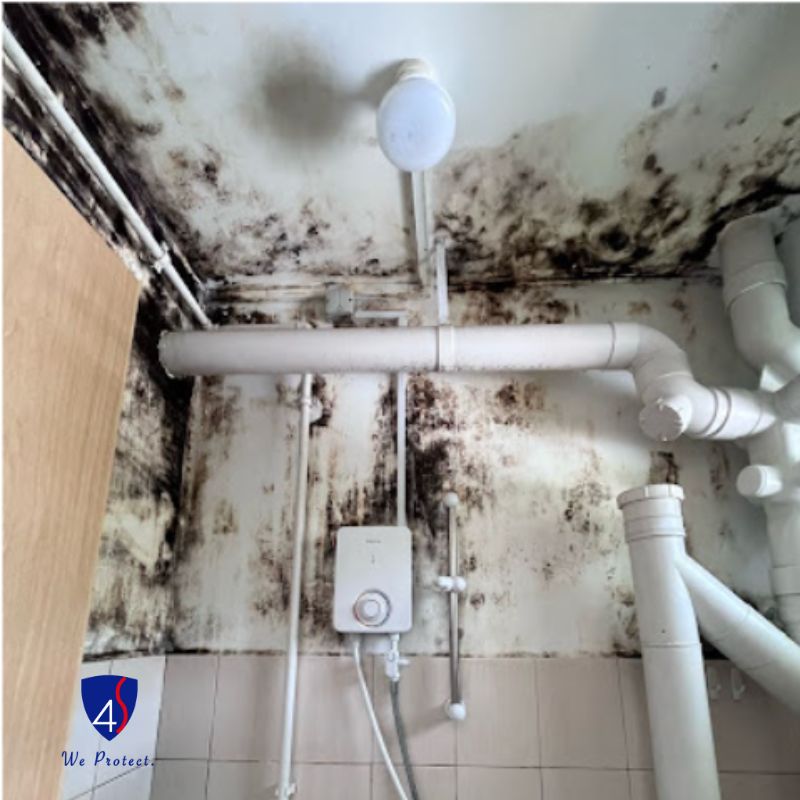
Toilet ceiling before 1
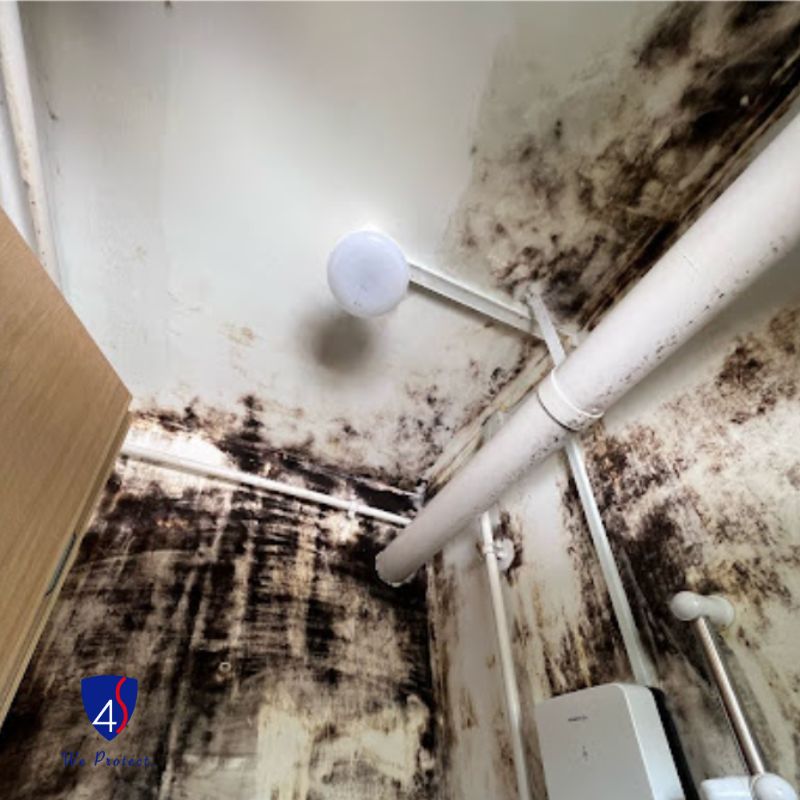
Toilet ceiling before 2
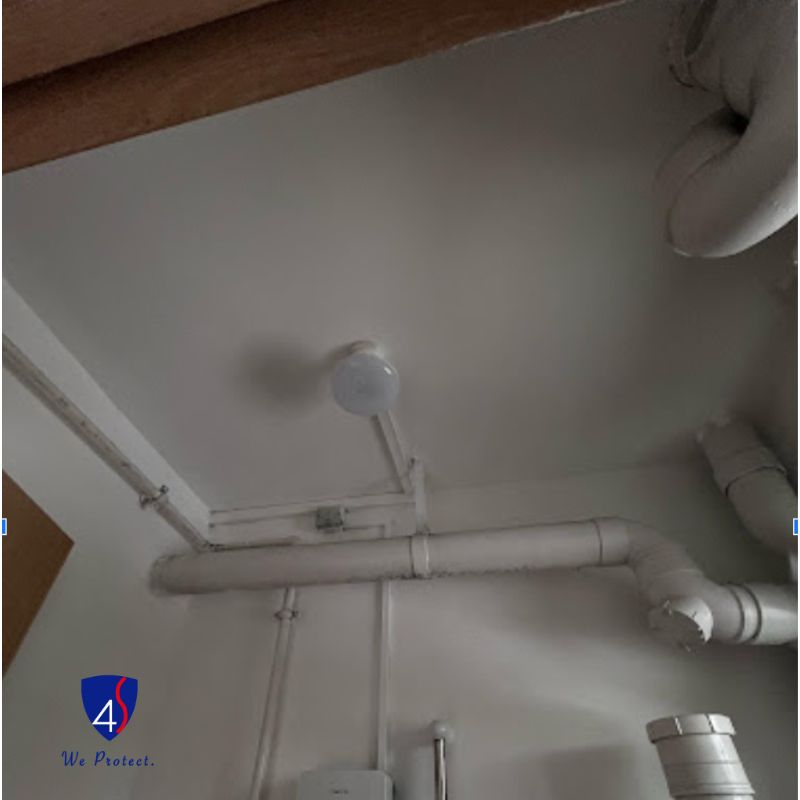
Toilet ceiling after
Cleaning a small patch yourself, and when to call us
A small patch of spotting on a firm, painted ceiling can often be cleaned. The US EPA says that if the mouldy area is less than about 10 square feet (roughly 0.9 square metres), in most cases you can handle it yourself.
- Ventilate the room and wear gloves.
- Scrub the spots off with detergent and water, then dry the ceiling completely.
- Never mix bleach with cleaners that contain ammonia.
- Do not paint over it. Paint applied over a mouldy surface is likely to peel.
Ask for an assessment instead if the patch is larger, returns after cleaning, sits under a neighbour's toilet, or the paint is bubbling or the plaster is soft. Recurring growth, larger areas and suspected hidden mould need a more careful assessment. Mould behind false ceiling panels needs separate inspection, and our terms exclude such concealed areas unless they are included in the scope of work.
If the ceiling paint is peeling or flaking
Peeling paint on a toilet ceiling is a warning sign, not only a cosmetic one. The US EPA lists peeling paint among the signs that water has leaked, and notes that mould damages what it grows on. Paint makers ask for loose and peeling paint to be removed before repainting.
Our terms say our paintwork is applied onto the existing surface and will not correct imperfections underneath, and that extensive replastering is charged separately. Before work starts, ask the assessor to check the condition of the paint and plaster, and ask the quote to say whether scraping, patching or replastering is included. Our anti mould paint guide explains how a ceiling is prepared before coating.
What’s the Solution?
- Mold Remediation: This isn’t just cleaning. It involves removing mould from affected surfaces and drying the area. Any additional treatment must suit the assessed scope; it does not replace moisture control.
- Anti-mould painting: Ask whether painting is appropriate for the assessed surface. Remove mould and dry the surface before painting; a coating does not replace moisture control or guarantee permanent prevention.
- Moisture checks and follow-up: Four Solutions assesses moisture conditions and explains the proposed work. Confirm any follow-up visit, inspection charge and eligible warranty in the written quotation; no fixed inspection plan is assumed.
What your quote should state
- The ceiling area covered, and whether the walls are included.
- The cause found, and whether a leak must be fixed first and by whom.
- The removal work, and whether a sealer, anti mould coating or repainting is included.
- Whether scraping, patching or replastering is included.
- Whether a false ceiling, or the space above it, is in the scope.
- Any warranty, and its conditions. Our terms list water seepage or leaks, and high condensation due to poor ventilation, among the cases where the warranty does not apply.
Our ceiling mould removal page explains what an assessment checks, and our bathroom mould removal page covers the rest of the room.
Why Choose a Professional Mold Treatment in Singapore?
- We provide mold removal and ULV fogging; ask which treatment suits your property
- Ask which coating and surface preparation are proposed for your ceiling
- Serve HDBs, condos, and commercial toilets
- Confirm charges and follow-up terms
Ask About a Mold Inspection
Ask us about the treatment scope, moisture control and current inspection fee before booking. 📲 WhatsApp us for an initial photo review of your toilet ceiling mold.
General guidance: the EPA guide to mould and moisture in the home explains moisture control and surface preparation. It is not a description of Four Solutions’ contract; confirm the proposed work and terms with the team.
Other sources: the US EPA on mould cleanup in your home and on moisture and mould in buildings, HDB's maintenance guide on MyNiceHome, and the Meteorological Service Singapore on Singapore's climate. These are general guidance, not an assessment of your toilet. Checked 10 October 2026.
Frequently asked questions
Why does mould keep coming back on my toilet ceiling?
Mould can return when dampness remains or develops again. An assessment should check possible condensation, ventilation problems and leaks rather than infer a cause from the stain alone.
How do I stop ceiling mould from returning?
Address the moisture problem and arrange suitable removal and drying. Discuss ventilation and whether painting is needed. Ask what follow-up is included; no treatment can guarantee against every future leak or moisture problem.
Is my toilet ceiling mould coming from the flat above?
It can be. Water marks running from the ceiling down the wall, paint that bubbles or peels, or a stain that stays after the room is dry point towards water from above. Marks near the shower that ease with ventilation point towards condensation. An inspection with a moisture meter tells the two apart.
Can I just repaint my toilet ceiling with anti mould paint?
Not over mould or a damp ceiling. The US EPA warns that paint applied over mouldy surfaces is likely to peel. Remove the mould, fix the moisture source and let the ceiling dry before any coating goes on.