

Mould usually comes back because the moisture feeding it is still there: condensation, a leak or seepage, poor ventilation, or humidity that stays high. Cleaning and repainting remove what you can see, not the moisture source, and growth in absorbent materials or hidden spaces can remain. Four Solutions looks at the affected surfaces and the likely moisture pathway before quoting removal and any protection; a repair that stops a leak may need a separate contractor.
Why mould returns after cleaning or painting
The US EPA guide to mould and moisture starts from one point: the key to mould control is moisture control. If the surface stays damp, growth can return however well it was cleaned. Three things commonly keep it coming back:
- The moisture source is still active. Condensation on cold surfaces, a slow leak, seepage through a wall or roof, or a room that never dries out keeps feeding new growth.
- It was painted over. The EPA advises not to paint or caulk mouldy surfaces, and to clean and dry the surface first. Fresh paint over growth hides the stain for a while; it does not dry the wall behind it.
- The material held on to it. Absorbent materials such as ceiling boards, carpet and fabric can hold growth inside them. The EPA notes they may have to be thrown away if they become mouldy, which cleaning the surface cannot replace.
Match the pattern to the likely cause
Where mould returns, and what it looks like, helps narrow down the cause. These are possibilities to check, not a diagnosis; an assessment confirms them.
| Where it returns | What you may see | Possible cause | Read more |
|---|---|---|---|
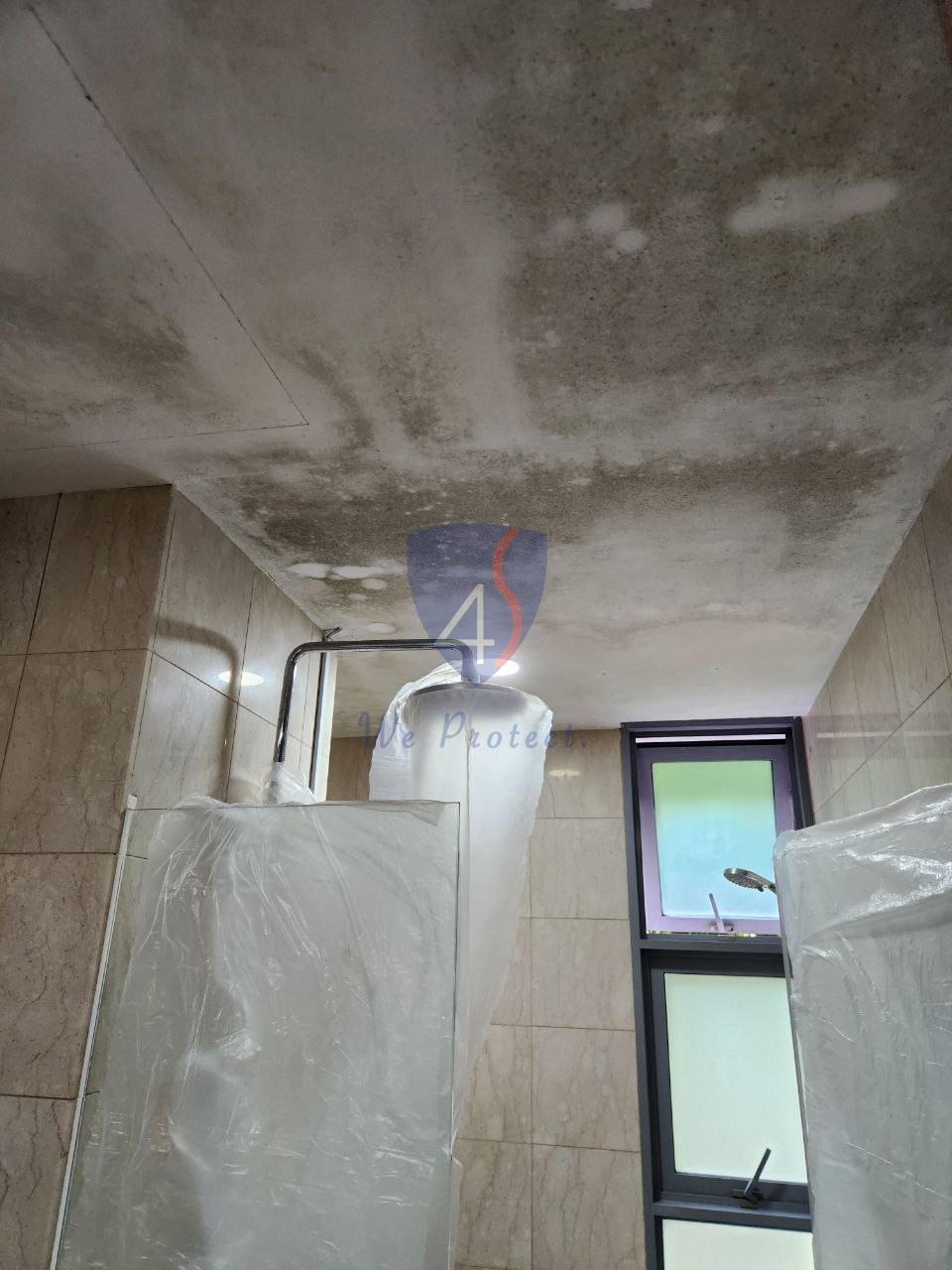
| Ceiling below a bathroom, roof or aircon | Staining that spreads, bubbling or peeling paint | Leak, roof seepage or aircon condensation | Ceiling mould |
| Bathroom ceiling, grout and silicone | Speckling that returns after cleaning | Humidity not cleared after showers | Bathroom mould |
| Wall behind a wardrobe or bed | Growth hidden behind furniture, musty wardrobe | Condensation and little air movement | Wardrobe mould |
| Around the aircon unit or trunking | Speckling on the unit or a damp patch below it | Condensation or a blocked drain line | Aircon mould |
| Kitchen and service yard cabinets | Stained or swollen cabinet base, musty smell | Pipe leak, ponding or wall seepage | Mould removal |
| Window frames and sills | Growth along the bottom of the frame | Condensation collecting on cold glass | Room by room checklist |
What surface cleaning can and cannot do
Cleaning can remove visible growth from hard, non absorbent surfaces such as tile and glass. It cannot dry a damp wall, stop a leak or reach growth inside ceiling boards, behind built in furniture or under paint. That is why a patch can look clear for a few weeks and then return in the same place.
For a small patch, the room by room checklist covers the EPA guidance on what you can usually clean yourself, its exceptions and the protective equipment to use. Anything larger, on absorbent material, or back for the second time is a sign to look for the moisture source instead of cleaning again.
What you can do now to slow it down
Most of these steps come from the EPA guidance, and they help whether or not you book a treatment:
- Dry anything that gets wet within 24 to 48 hours. The EPA notes that in most cases mould will not grow if damp materials are dried within that time.
- Run the bathroom fan or open the window when showering, and use the exhaust fan or a window when cooking.
- Fix plumbing leaks and other water problems as soon as possible.
- Where condensation collects on windows, walls or pipes, dry the surface and reduce the moisture source.
- Keep indoor humidity below 60 percent where you can, and keep a little space between furniture and walls that stay damp. The air purifier or dehumidifier guide explains which makes more difference for mould.
When to get it assessed
Ask for an assessment when the mould has come back after cleaning, covers a large area, is on a ceiling or in a concealed space, follows a leak, or comes with a musty smell and nothing visible. The mould inspection guide explains what an assessment looks at and its limits: moisture readings and thermal imaging indicate damp areas and temperature differences, and concealed areas may need further access.
What a Four Solutions treatment covers
Four Solutions investigates moisture, condensation and hidden leaks, then removes active growth from the affected surfaces rather than painting over stains. Where suitable, anti mould painting is applied after removal to help reduce future growth, with advice on ventilation, humidity and maintenance. Any separate repair needed to stop the moisture, such as a plumbing or roof leak, should be identified before you agree to treatment. Recurrence remains possible if the damp conditions continue.
Most residential jobs range from $250 to $2,500 or more, depending on the rooms and surfaces affected. Selected mould remediation works may include warranty cover, depending on treatment scope and site conditions. The written quote confirms the duration, covered areas and exclusions. The mould removal cost guide explains what moves a quote, and the mould removal page shows the full process.
If the mould is in a rental or condo, the condo and rental guide covers documenting it before raising it with the landlord or management. Anti mould paint is compared in the anti mould paint guide.
Recurring mould FAQs
Why does mould keep coming back after I clean it?
Usually because the moisture feeding it is still there: condensation, a leak or seepage, poor ventilation or humidity that stays high. Cleaning removes the growth you can see; it does not remove the moisture source, and growth in absorbent materials or hidden spaces can remain. The EPA puts it simply: the key to mould control is moisture control.
Will anti mould paint stop it coming back?
Not on its own. The EPA advises against painting or caulking over mouldy surfaces; clean the mould and dry the surface first. Where suitable, Four Solutions applies anti mould painting after removal to help reduce future growth, but recurrence remains possible while the damp conditions continue.
How can I tell whether it is a leak or condensation?
The pattern gives clues. Growth on cold surfaces, near an aircon unit or worse when the aircon runs can point to condensation. Staining that spreads from one point, appears after rain or sits below a wet area can point to a leak or seepage. A photograph alone may not settle it; an assessment looks at the affected area and the likely moisture pathway. The condensation or leak guide explains how to read the signs before getting an assessment.
Who fixes the cause in a rental or condo?
It depends on where the moisture comes from and on your tenancy or management arrangements. A leak from a neighbouring unit, the roof or common property may involve the landlord, the owner upstairs or the management. The condo and rental guide explains how to document the problem before raising it.
How much does recurring mould removal cost?
Four Solutions states that most residential jobs range from $250 to $2,500 or more. The final quote depends on the rooms and surfaces affected and the work needed after assessment. Any separate repair needed to stop the moisture should be identified before you agree to treatment.
Is there a warranty if the mould comes back?
Selected mould remediation works may include warranty cover, depending on treatment scope and site conditions. The written quote confirms the duration, covered areas and exclusions.