
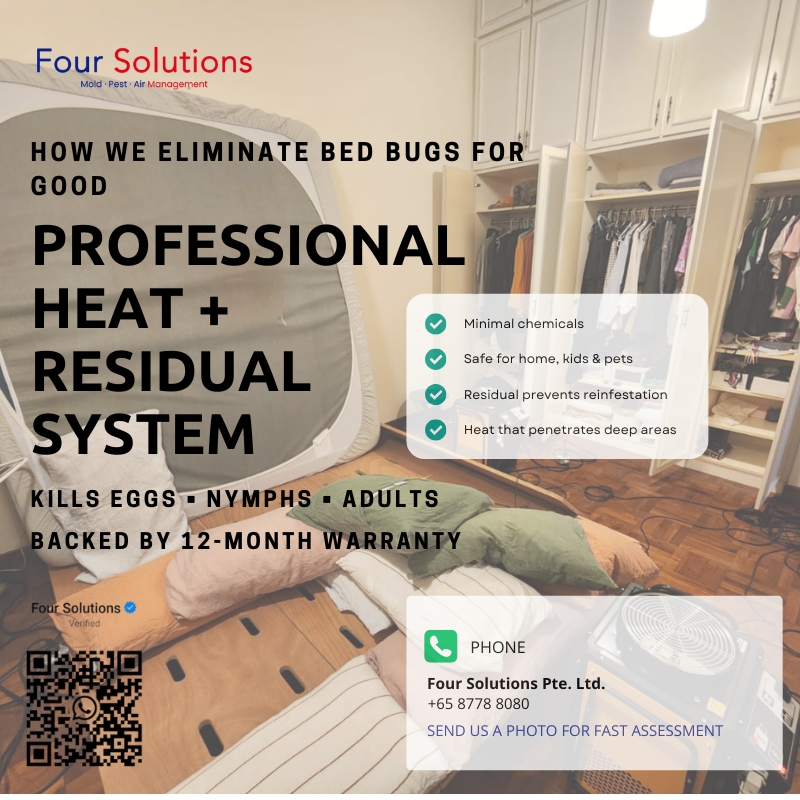
Bed bugs leave black spotting and blood marks on sheets, and cast skins and eggs in mattress seams and bed frames. Bites alone do not confirm them. Household sprays may not reach eggs or hidden harbourage. Four Solutions assesses the rooms and treats with controlled heat, steam and targeted residual treatment. Published prices start from $600 for one bedroom, and eligible packages include up to 12 months of unlimited retreatment under the written quote.
How to confirm it is bed bugs
Adult bed bugs are about the size of an apple seed, flat and reddish brown, and they usually feed at night, so people often notice the evidence before the insects. The NEA guide to managing bed bugs describes the signs and habits.
Signs to look for
- Itchy bites on skin that was exposed while you slept. Bites are a reason to check, not proof: other insects and skin conditions can look similar.
- Small blood marks on sheets and pillowcases
- Black spotting, which is dried droppings, along mattress seams, piping and bed frame joints
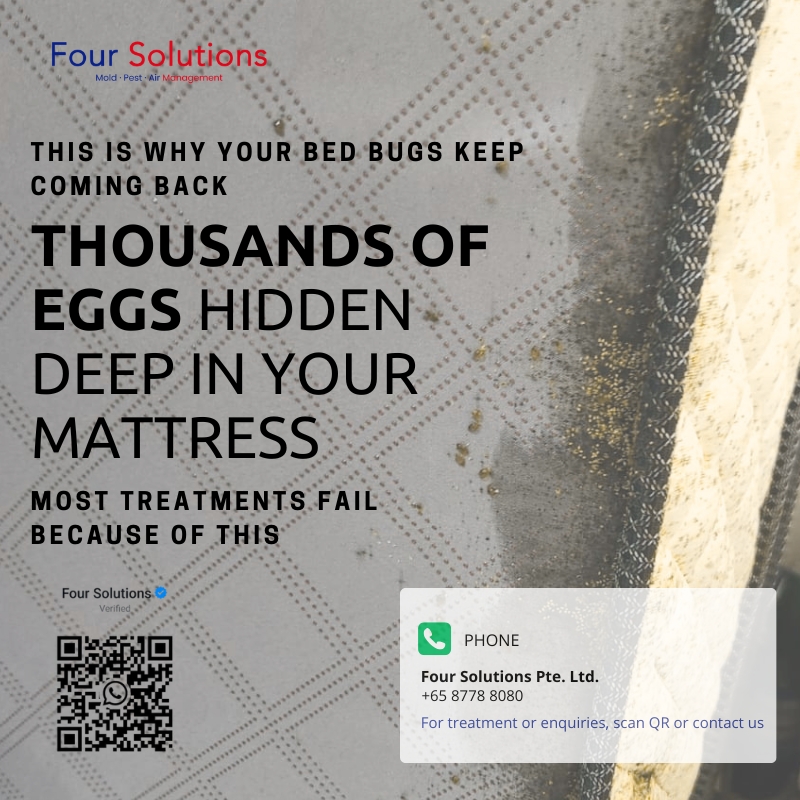
- Cast skins and tiny white eggs stuck in seams, screw holes and corners
- A sweet musty smell near the bed in a heavier infestation
Where to look
Strip the bed and check the mattress seams and piping, the underside of the mattress, the headboard, the divan base and every joint and screw hole in the bed frame. Then move outward: bedside tables, sofa joints, the skirting behind the bed, curtain hems and the wardrobe edges nearest the bed. Use a torch. Bed bugs stay within a short crawl of where people sleep or sit for long periods.
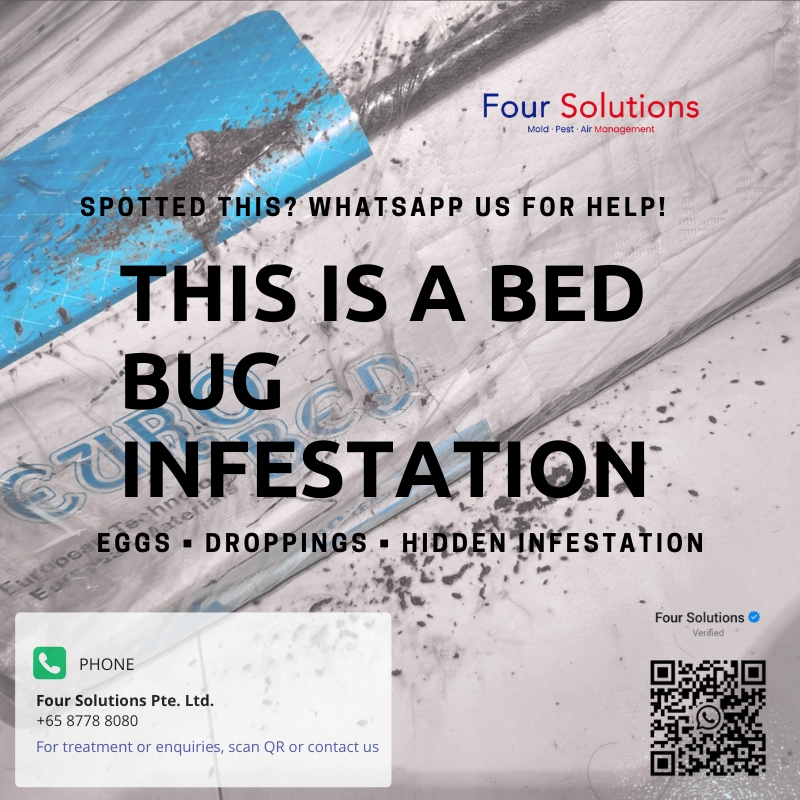
Not sure what you are looking at? Send a few clear photos of the insects, the spotting or the seams to Four Solutions on WhatsApp and we will say whether the photos are enough or an inspection is needed before you book anything. Tiny pale insects on walls and in damp cupboards are more often booklice; see the booklice guide if that is what you are seeing.
Just back from a trip and not sure what to check first? See the luggage and unpacking checklist for what to inspect, how to handle laundry and what to record.
Not sure whether you are dealing with bed bugs or something else? The dust mites vs bed bugs guide explains how to tell the difference from the physical evidence, and the lookalikes guide covers other insects that resemble bed bugs.
If you suspect bed bugs may have spread from a neighbouring flat, the neighbouring flats guide explains how to record evidence and coordinate inspections without assigning blame.
What causes bed bugs
Bed bugs arrive on belongings. UC IPM lists luggage, clothes, bedding and furniture as ways they come into a home, and names second hand mattresses and furniture as high risk sources. Travel is a common route; the luggage checklist covers what to do after a trip.
What a bed bug inspection checks
An inspection confirms whether there is bed bug activity, finds the hiding places and leads to the recommended treatment. Four Solutions reviews your photos or inspects on site. NEA notes that detection is done by visual inspection of furniture and with surveillance traps.
Why household sprays often fall short
Household aerosols act on the bugs they reach. Eggs and bugs deep in seams, frame joints and wall edges may not be reached, so activity can continue after a room looks clear. Four Solutions advises against spraying random insecticide before an assessment, because it can disturb the bugs and make the hiding places harder to find.
What to do instead, right now:
- Do not spray random insecticide before the assessment.
- Do not move the mattress, bedding or clothes to another room. That spreads them.
- Hot wash and high heat dry the bedding and clothes that can take it, then keep the clean items sealed in bags.
- Take photos, note where you found them and the bite pattern, and message us so the visit can be planned.
Before the treatment visit
Preparation depends on the treatment selected, and our team gives you the checklist after the assessment. It covers three things:
- Contain bedding and laundry. Bag items before carrying them through the home. Use a hot dryer for suitable fabrics according to care labels, then keep cleaned items sealed. Washing alone may not eliminate bed bugs.
- Clear access without spreading bugs. Give the team access to beds, furniture joints and skirting. Do not move untreated belongings into other rooms; ask us how to handle items that need moving.
- Plan for heat sensitive items and pets. Tell us about candles, aerosols, delicate items, electronics and pets before the visit. The team explains what to remove for the selected method and when it is safe to return.
The full checklist is on the bed bug treatment page.
Heat or hybrid: which treatment is used when
Four Solutions chooses the method after checking the rooms, the hiding places and the life stages present. There are three tools, and most treatments combine them.
Steam
High temperature dry steam directed into seams, mattresses, upholstered furniture, curtains and fabric surfaces. It is immediate contact treatment for insects and eggs on accessible surfaces, with low moisture and no chemical residue. It is used where spraying is unsuitable and as a targeted complement to a wider treatment plan.
Indoor residual spray
A professional residual insecticide applied only to suitable travel paths, cracks and hiding areas found at inspection. It leaves a barrier on treated surfaces that keeps working on survivors and newly hatched bed bugs after the main treatment.
Whole room heat
Commercial electric heaters and air circulation fans raise the whole room to a temperature bed bugs cannot survive where the required conditions are reached, with temperature sensors, thermal cameras and digital temperature logging monitoring the run. Controlled heat targets eggs, nymphs and adults inside mattresses, frames, furniture and cracks that sprays and steam may not reach. Heat itself leaves no pesticide residue.
Heat only or hybrid
The hybrid package pairs whole room heat with indoor residual spray and is used when eggs, hidden harbourage or recurring activity need the broadest coverage. A heat only treatment may be selected after assessment, for example where chemical use is a concern. The complete hybrid package is not chemical free because of the residual stage. Either way, the written quote confirms the method, the treated areas and the preparation and return instructions. The treatment page compares the methods side by side.
What a treatment visit involves and how long it takes
- Inspection and assessment. We review your photos or inspect on site to confirm bed bug activity, find the hiding places and recommend the treatment.
- Treatment. For a hybrid treatment the team sets up the heat equipment, runs the controlled heat for approximately 3 to 5 hours depending on the infestation and monitors temperatures throughout, then applies residual treatment to the suitable surfaces. Steam is used on accessible seams where needed.
- Final inspection and handover. The team checks the treated areas, explains the aftercare and confirms the warranty terms for your package.
When you can go back into the room depends on the selected method and the product instructions. The technician confirms when it is safe to return; after a residual stage, the room cooling down does not by itself mean it is ready.
What it costs
Published bed bug treatment prices start from $600 for one bedroom, $900 for two bedrooms and $1,200 for three or more bedrooms. An entire unit is quoted after a quick assessment. Send photos, the number of bedrooms affected and your location, and the final quote is confirmed after assessment. The full price table is on the treatment page, and the pest control cost guide explains what moves a quote up or down.
What the warranty covers
Eligible bed bug treatment packages include the 100% elimination or money back guarantee and up to 12 months of unlimited retreatment for covered activity. The written quote confirms warranty eligibility, the covered areas and the conditions. Two conditions apply to every package: follow the treatment recommendations you are given, and note that external reintroduction, for example bed bugs carried in again after travel, is excluded. If activity continues after treatment, contact us so it can be assessed under the agreed guarantee.
Bed bugs are back after a previous treatment
When bed bugs return after a treatment, these are the usual possibilities to check.
- Eggs were not reached. A treatment that does not reach the seams and joints can leave eggs that hatch later.
- Hiding places were missed. Bed bugs sit deep in frame joints, behind headboards, under skirting and inside wall edges, beyond where a surface treatment lands.
- Belongings moved them. Carrying untreated bedding, clothes or furniture into another room during or after a treatment seeds a new area.
- They were brought back in. Travel, visitors, second hand furniture or a neighbouring unit in a dense block can reintroduce them after a successful treatment. See the second-hand furniture pest checklist for what to inspect before bringing pieces inside.
If the previous treatment was by another company, tell us what was done and when, and send photos of what you are seeing now, so the assessment covers the rooms that were missed. If Four Solutions treated the home and the package is within its warranty period, contact us and the activity is assessed under the agreed guarantee.
Bed bug FAQs
How do I know if I have bed bugs?
Look for the evidence together: small blood spots or black specks on sheets and mattress seams, cast skins, tiny pale eggs in seams and joints, and live bugs about the size of an apple seed. Bites alone do not identify bed bugs, because other insects and skin conditions can look similar. Send Four Solutions clear photos on WhatsApp and we will say whether they are enough or an inspection is needed.
Can I get rid of bed bugs with a spray from the supermarket?
Usually not on its own. Household sprays may not reach eggs or bugs hidden in seams, joints and cracks, and established infestations generally need the hiding places treated. Drying suitable bedding on a hot setting helps in the meantime. Four Solutions assesses whether steam, targeted residual treatment or controlled heat is appropriate.
How much does bed bug treatment cost in Singapore?
Four Solutions publishes prices from $600 for one bedroom, $900 for two bedrooms and $1,200 for three or more bedrooms. Entire units are quoted after a quick assessment. The written quote confirms the method, the treated areas and the warranty conditions.
How long does bed bug treatment take and do I need to move out?
A hybrid heat treatment usually runs 3 to 5 hours depending on the size of the space and the level of activity. When you can go back into the room depends on the selected method and the product instructions, and the technician confirms when it is safe to return. After a residual stage, cooling alone does not mean the room is ready.
What does the bed bug warranty cover?
Eligible packages include the 100% elimination or money back guarantee and up to 12 months of unlimited retreatment for covered activity. The written quote confirms eligibility, covered areas and conditions. Treatment recommendations must be followed, and external reintroduction is excluded.
Why are the bed bugs back after a treatment?
Possible reasons include eggs or hiding places the treatment did not reach, belongings that carried them into another room, or bed bugs brought in again after travel or from a neighbouring unit. Tell us what was done before and send photos of the current signs so the assessment covers the rooms that were missed.