
Tiny pale insects on Singapore walls may be booklice. Identification comes first, followed by a check of moisture and possible food sources. Moisture control is central to managing recurring activity. Four Solutions, an NEA-registered vector control operator, assesses booklice and any visible mould before recommending the treatment scope. Send close-up photos and the affected locations; an inspection may be needed.
WhatsApp a photo for a booklice quote
Booklice treatment options · What affects pest control pricing
Tiny pale insects crawling along a wall, a skirting board or around a window frame are one of the most common calls we get in humid Singapore homes. Other small insects can look similar, so confirm identification before choosing treatment. If booklice keep returning, check the affected area for moisture and possible food sources. Here is what to check, what you can do yourself and when to seek an assessment.
Are they really booklice?
Booklice, sometimes called psocids, are pale to light brown, under 2mm long, wingless and slow-moving. They gather on damp walls, skirting, window frames, stored paper and cardboard. They do not bite and they do not damage the home structure. Size and colour alone are not enough to distinguish booklice from other small insects. If you are unsure, send a clear close-up and the location. We can advise whether the photo is sufficient or an inspection is needed.
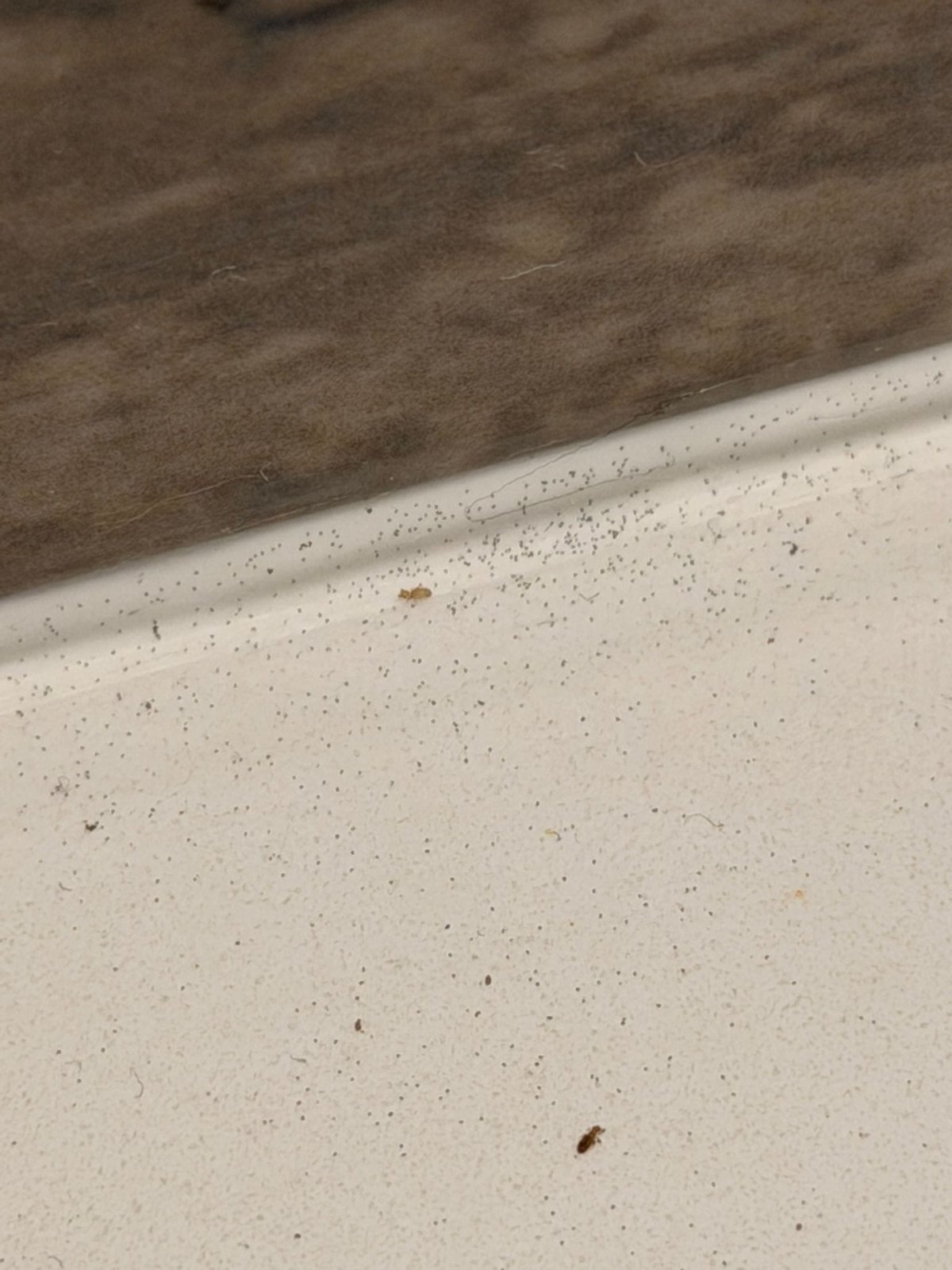
Why you have booklice
Booklice feed on the microscopic mould, mildew and starchy residue that build up in humid conditions. Moisture is a central control issue, but booklice can also use stored grains and other starchy material. Their presence alone does not establish poor hygiene or visible mould. Where booklice keep appearing there is usually a damp surface nearby, often a wall, the inside of a cabinet, the back of a wardrobe or a window frame. Mould on that surface is common but not guaranteed, so an assessment considers the affected surfaces and possible food sources before treatment is recommended. This is why they keep coming back after you wipe them away.
How to get rid of them
- Bring the humidity down with a dehumidifier, aircon dry mode or better airflow. University of Minnesota Extension notes booklice survival drops once relative humidity stays below roughly 45 to 50 percent. Use readings over time to check whether moisture control is being maintained.
- Check affected surfaces and stored materials for mould, mildew or other food sources. Cleaning and drying work alongside moisture control.
- Small numbers can be vacuumed or wiped away, then the surface dried. Check cabinets, wardrobes, stored paper and cardboard, and window frames for damp.
- Do not rely on spraying alone. Pesticides are normally unnecessary for booklice and do little while the damp remains, since spraying alone does not resolve the moisture or available food sources.
When to call a professional
It is worth an assessment when booklice keep returning, appear across several areas, or come with a musty smell or visible mould, because that points to a wider damp and mould issue. As mould remediation specialists, Four Solutions treats the booklice and the mould that feeds them together, and can assess the humidity behind it through our mould removal service. You can message us on WhatsApp with a photo for a quick assessment. Booklice work is quoted after the photos or inspection, because the price depends on the areas affected and whether mould treatment is included; the pest control cost guide explains what a written quote should cover.
Further reading: University of Minnesota Extension on psocids (booklice and barklice), reviewed 2024. It covers general biology and moisture control, not Four Solutions treatments or results.
Booklice FAQs
Are these tiny bugs on my wall booklice or bed bugs?
Booklice are pale, under 2mm, wingless and move slowly around damp walls, skirting and stored paper, and they do not bite. Size and colour alone are not enough to identify the insect. Send a clear close-up and the location so we can advise whether an inspection is needed.
Why do I keep getting booklice even after cleaning?
Cleaning may remove visible insects without addressing moisture or food sources. Check damp surfaces and stored materials, and monitor whether activity returns after the area is cleaned and dried.
Are booklice harmful?
Booklice do not bite people or pets and do not damage the home structure. Large numbers are mainly a sign of persistent humidity and, often, mould or mildew on a nearby surface, which is the real thing worth addressing.
How do I get rid of booklice for good?
Lower the humidity, treat any mould feeding them, and dry out the affected walls, cabinets and window areas. Spraying alone clears the visible insects but not the conditions behind them, and booklice can return if the room becomes damp again, so moisture control is ongoing.
When is professional booklice treatment needed?
Treatment is worth considering when booklice keep returning after you have dried and cleaned the area, when they appear in several rooms, or when there is visible mould or a musty smell. A small cluster on one surface that stays dry can usually be handled yourself. Send photos and we will say whether an inspection is needed.
What affects a booklice treatment quote?
The quote depends on the rooms or areas affected, whether mould removal and anti-mould protection are needed alongside the insect treatment, access to wardrobes and storage, and any follow-up. Ask for a written quote that states the method, covered areas, follow-up and any applicable warranty terms before booking.