
If you suspect termites in a Singapore HDB or home, photograph visible signs and arrange an inspection before spraying or disturbing the area. Mud tubes, shed wings and frass can help identify the insect. Four Solutions assesses the type of termite and affected areas before recommending treatment.
Termites are easy to miss until the damage is done. By the time many people notice them, the colony is often well established inside skirting, door frames or furniture. The good news is that the early signs are recognisable if you know what to look for, and treating at the colony level is what actually stops them. Here is what to watch for and what to do.
The signs of termites in your home
- Mud tubes: thin lines of mud running up walls, skirting or pipes, used by subterranean termites to travel.
- Hollow or crumbling wood: skirting, door frames or furniture that sounds hollow when tapped or flakes away.
- Discarded wings: small piles of wings near windows or lights after a swarm.
- Frass: fine powder or what looks like sand near timber, which can indicate drywood termites inside the wood. The wood dust and frass guide explains how to tell termite frass from wood borer dust.
Subterranean vs drywood termites
Subterranean termites nest in the soil and enter through the ground, building mud tubes to reach timber. Drywood termites live inside the timber itself and leave frass behind. They are treated differently, which is why identifying the type matters before any treatment. In HDB flats, condos and landed homes, termites often enter through the ground floor, service ducts or shared structures, then move into skirting, frames and built-in furniture.
What do termites look like?
Winged adult termites, or swarmers, have two pairs of similar-length wings, a broad waist and straight, bead-like antennae. Winged ants have longer front wings, a pinched waist and elbowed antennae. Compare all three features: a distant photograph or loose wings can be misleading.
Worker termites are wingless and usually hidden in wood or shelter tubes. They do not look like the winged adults shown in this feature comparison. Seeing swarmers alone does not establish that the building is infested; a structural assessment is needed to check that.
These identification points come from UC IPM termite guidance. The diagram is an original schematic rather than a job photograph or species identification.
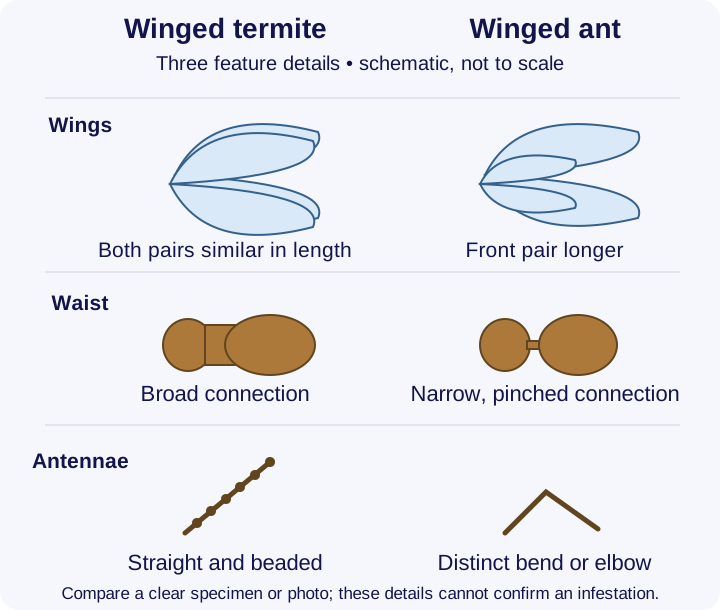
Is it a termite or a flying ant?
Winged termites are easily mistaken for flying ants. UC IPM, a University of California extension reference, points to the antennae, wings and waist as the way to tell them apart. Termites typically have a thick waist, straight antennae and four wings of similar length. Ants have a pinched waist, bent antennae and front wings longer than the back pair. A clear photo of the insect, or of the shed wings, lets an inspector confirm which it is before anything is treated.
Winged insects or discarded wings tell you termites may be nearby, not how large the colony is or where it sits. Drywood termites are rarely seen except when they swarm or when frass or damage turns up, so an inspection is how it gets confirmed.
What to do first
- Leave mud tubes, frass and damaged timber as they are. Do not spray, scrape or break open tubes before the inspection.
- Photograph the insects or wings, any mud tubes, frass and the damaged timber, with a coin or ruler for scale.
- Note where and when you saw activity, and whether it is inside your own unit or in a shared structure.
- Clear access to skirting, door frames, built-in cabinets and any other areas you suspect, so the inspector can reach them.
Why an inspection matters before spraying
Treating the insects you can see may leave activity in timber or other inaccessible areas untreated. The type of termite and the affected structure determine the appropriate method. Leave visible tubes and damaged timber intact so an inspector can assess the signs before treatment.
When to call a professional
If you see any of the signs above, it is worth an inspection sooner rather than later, because visible damage usually means the colony is established. Four Solutions inspects suspected termite activity and recommends an appropriate treatment for homes and businesses across Singapore. Scope and price are quoted after that inspection, and what changes termite treatment cost in Singapore is set out separately. You can send a photo on WhatsApp for a quick assessment.
Questions to ask before you accept a termite quote
- Which type of termite was identified, and how was it confirmed?
- Which method is proposed, a soil barrier or baiting, and why does it suit this property?
- Which areas are covered, and which timber, structures or shared areas fall outside the scope?
- What follow-up and monitoring are included, and is any warranty stated in writing?
- What experience does the company have with this type of termite and building, and who will carry out the inspection?
Treating the colony does not by itself restore damaged wood, so ask whether timber repair or replacement is included.
Sources: UC IPM guidance on drywood termites, UC IPM termite pest note (both general identification references from California, not Singapore-specific) and UC IPM ant and termite identification comparison. Guidance checked 8 October 2026.
Termite FAQs
There is fine sand or powder near my furniture, is that termites?
Fine powdery frass or what looks like sand near skirting, door frames or timber furniture is a common sign of drywood termite activity. It is worth an inspection early, because visible frass can mean the colony is already established inside the wood.
I see termites at night in my flat, what should I do?
Photograph the insects or wings and note where you saw them. Leave visible tubes and damaged timber intact and arrange an inspection before treatment. Winged insects can be confused with ants, so identification matters before a method is selected.
Can my furniture be saved once termites are found?
It depends on how far the damage has gone. Early detection gives the best chance of saving timber and furniture. An inspection identifies the type of termite and the extent, so the treatment and any repairs are matched to the situation.
Do termites really happen in HDB flats?
Yes. Termites appear in HDB flats, often entering through the ground floor, service ducts or shared structures, then moving into skirting, door frames and timber furniture. They are not limited to landed homes.
Is it a termite or a flying ant?
Winged termites are easily confused with flying ants. Compare the antennae, wings and waist: termites typically have straight antennae, wings of similar length and a thick waist, while ants have bent antennae, longer front wings and a pinched waist. A clear photo lets an inspector confirm it.
Do wings near my window mean termites are in my home?
They mean termites may be nearby, because winged reproductives leave a colony to start new ones. They do not show how large the colony is or whether it is inside your home, so an inspection is needed to confirm.
What should a termite inspection and quote cover?
The inspection should identify the termite and check the affected timber and access routes. The quote should then state the method, the area covered, the follow-up and any warranty. Four Solutions quotes after an inspection because the type of termite, the extent of activity and the size of the property all affect the scope.