
To get rid of rats in a Singapore home or HDB, trapping alone may not solve the problem if the entry points remain open. NEA notes that a sighting may indicate a larger infestation. Trace the entry points, remove the current rats, then proof the gaps. Four Solutions (NEA licensed) traces how they get in and proofs the entry points to help keep them out.
Rats are a growing problem in Singapore, and once you see one in your kitchen, along the corridor or in the ceiling space, there may be more nearby. Traps and bait from the supermarket might catch one, but they may not solve the problem if rats can re-enter through unsealed gaps. Here is how to actually get rid of them.
Why rats keep coming back
Rats follow food, water and shelter, and they are relentless about finding a way in. In HDB flats and landed homes they travel through rubbish chutes, drainage lines, pipe openings, gaps under cabinets and holes around service ducts. If you only trap or bait, you may reduce the number for a while, but unsealed gaps can allow further activity. NEA notes that a live rat sighting may point to a larger infestation, because rats are social animals that live in groups. Proofing the entry points alongside removal is what helps prevent recurrence.
If you hear scratching above a false ceiling, the false ceiling guide covers what to record and how pest assessment and building access differ.
How to tell it is rats
NEA lists these signs of rat activity at home or in the neighbourhood. Noting which ones you see, and where, makes an assessment faster and more accurate.
- Live sightings. Rats live in groups, so one sighting can mean more nearby.
- Droppings. Small, dark pellets, usually near food or along the routes rats run to hidden nesting areas. If you are unsure whether pellets are from rats, cockroaches or lizards, the droppings comparison guide helps tell them apart.
- Gnaw marks. Rough-edged openings in plastic, cables and similar materials.
- Rub marks and footprints. Dirt marks along the lower edges of walls and pipes, and prints in dusty indoor areas.
- Burrows. Round openings about 2 to 4 inches across, often with disturbed soil, in turf and planting areas outside.
Noises in the ceiling or walls are also worth noting, with the time and place, even if you have not seen a rat.
What to do first if you see a rat
NEA advises against trying to catch or handle rats yourself. Instead:
- Note the exact location and time, the direction the rat came from and went to, roughly how many you saw and how often.
- Take photos or video from a safe distance, including droppings, gnaw marks or food waste nearby.
- Tie food waste securely, keep bins closed and store food in tightly covered containers.
- For rats in a shared area such as a corridor, bin centre or back lane, NEA asks residents to report sightings through the OneService app. A report covers the shared area; activity inside your own unit still needs its own assessment and proofing.
How to get rid of rats properly
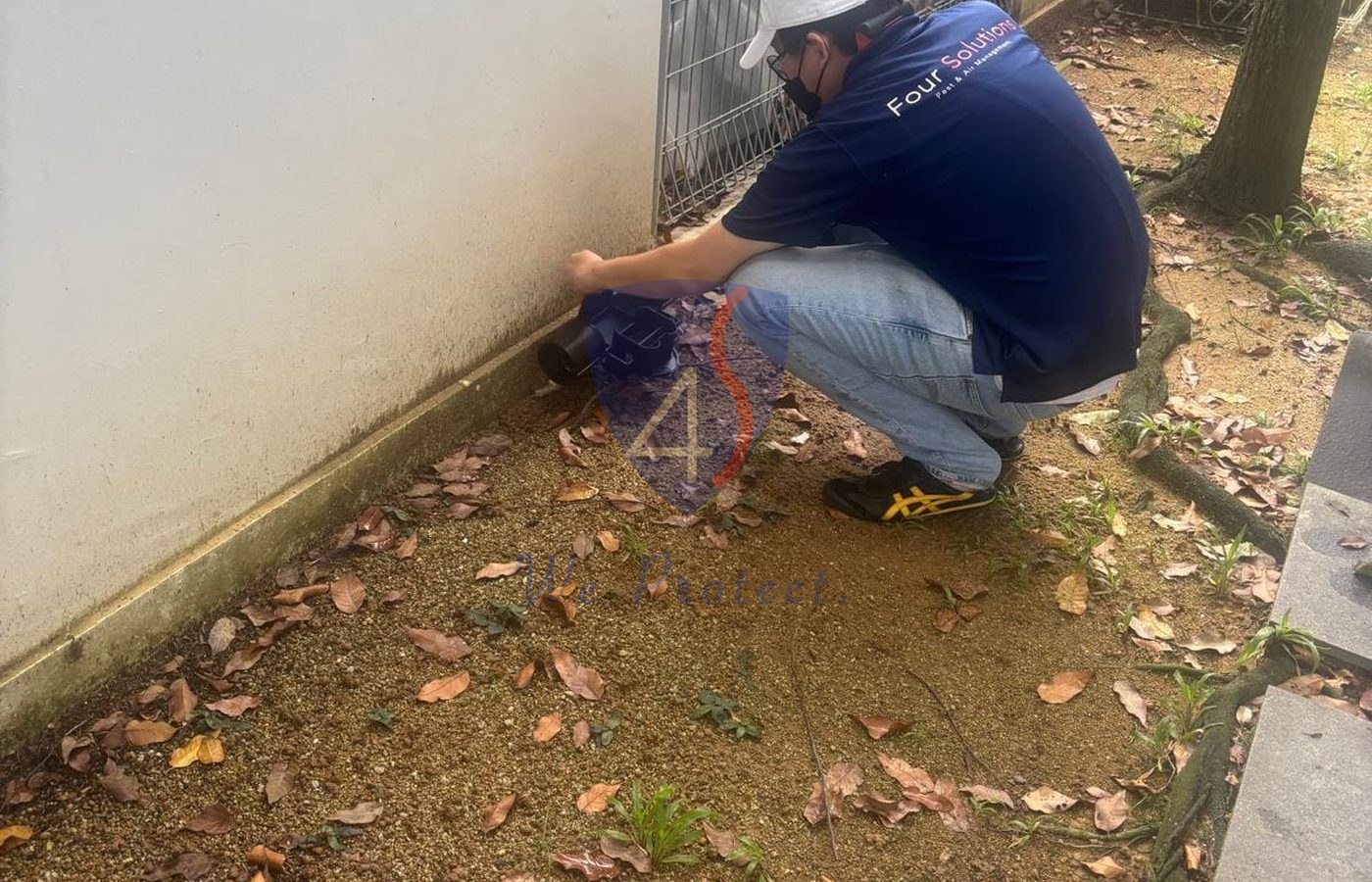
- Find the entry points. Gaps around pipes, under kitchen cabinets, at the rubbish chute and along drains are the usual routes.
- Have the current population removed by a licensed operator, with baiting and trapping placed where they actually travel.
- Proof the gaps. Sealing entry points helps reduce the chance of new rats replacing the ones you removed.
- Cut the food and water. Store food sealed, clear bins, and fix leaks and standing water that draw them in.
Why DIY measures may not be enough
Supermarket bait and traps treat the rats you can see, not the reason they are getting in. Without proofing the entry points and removing the food source, the problem may persist. NEA recommends good housekeeping, proper food storage and sealing gaps as part of rat prevention. For a lasting result, the population has to be removed and the gaps closed together, which is where a proper inspection matters.
When to call a professional
It is worth calling in help when you see rats more than once, hear them in the ceiling or walls, find droppings or gnaw marks, or have them in a kitchen or F&B space where hygiene matters. Four Solutions traces how rats are getting in, removes them and proofs the entry points to help keep them out, for homes and businesses across Singapore. You can send us a message on WhatsApp for a quick assessment.
What a rat control quote depends on
Rodent jobs are quoted after a quick assessment rather than from a fixed price list, because the work follows the premises and the activity. We do not charge for a quote: message us the pest and your location and we will advise the next step. Three things shape what it covers.
- Activity and access. Where and when rodents are seen, any noises or damage, and whether activity is inside the unit or in shared areas. Accessible routes to the affected spaces let the inspection be done properly.
- Proofing and responsibilities. Which entry points can be treated or proofed within the agreed scope, and which building or drainage repairs sit with the owner or managing agent. Treatment inside a unit cannot settle an unaddressed access problem elsewhere.
- Follow-up and costs. The visit schedule, return visits and service records, confirmed in writing. New activity should be reported with its location and timing.
Full scope and process are on the rodent control service page, and the wider pest control cost guide sets out how the other pests are priced.
Questions to ask before you accept a rat control quote
- Is the company a registered NEA Vector Control Operator? NEA states that only registered operators can be engaged for vector control work, and Four Solutions is registered as NEA201812722M.
- What will the inspection cover, and will you get a written scope that names the areas, the methods and the number of visits?
- Which entry points will be proofed, and which repairs fall to the owner or managing agent?
- How will activity be monitored afterwards, and what happens if rats return? NEA expects inspections, findings and treatment works to be recorded in a service report.
Sources: NEA rat prevention and control guidance for the general public and NEA guidance on vector control operators. Guidance checked 17 October 2026.
Rat control FAQs
How do I get rid of rats in my HDB kitchen?
Trapping or baiting alone may not resolve the problem if the entry points remain open. NEA recommends sealing gaps and maintaining good housekeeping alongside removal. The effective approach is tracing how they enter, usually pipe openings, gaps under cabinets or the rubbish chute area, removing the current activity, then proofing those entry points to help prevent recurrence.
Why am I suddenly seeing more rats?
NEA notes that rats gather where there is food, water and shelter, such as bins where food accumulates and secluded back lanes, and that they reproduce rapidly. A live sighting can point to a larger infestation. Removing them and closing entry points can help reduce recurrence.
How much does rat control cost in Singapore?
Rodent jobs are quoted after a quick assessment, because the price follows the premises, the extent of activity, access, and the proofing and monitoring required. There is no charge for the quote. Message us the pest and your location and we will advise the next step.
Are rats in the home a health risk?
Yes. NEA notes that rats can carry and spread diseases such as leptospirosis, murine typhus and hantavirus infection, directly or indirectly, by contaminating the environment, food and water. They also gnaw on wiring and fittings. It is worth dealing with an infestation promptly rather than waiting to see if it settles.
Can you get rid of rats in the ceiling or walls?
Yes. We inspect to find how they are entering the ceiling or wall space, remove them, and proof the access points to help prevent the space from being re-entered. Note when and where you hear them, because that helps the inspection find the route that needs closing.
What should I do first if I see a rat at home?
Do not try to catch or handle it. NEA advises noting the exact location and time, where the rat came from and went to, how many you saw and how often, and taking photos or video if you can. Keep food sealed and bins closed, then ask for an assessment so the entry route can be found.
Should I report rats in a shared area?
NEA asks residents to report rat sightings in the neighbourhood through the OneService app. A report covers shared areas; rats inside your own unit still need an assessment and proofing there.
What should a rat control quote include?
A written scope that names the areas covered, the method, the entry points to be proofed, the follow-up visits and any repairs left to the owner or managing agent. NEA states that only registered Vector Control Operators can be engaged, and Four Solutions is registered as NEA201812722M. Pricing follows the assessment.